As sustainability becomes a key priority for brands, manufacturers, and consumers, packaging materials are facing greater scrutiny than ever before. Businesses are no longer evaluating packaging solely on cost, performance, and aesthetics – they are also assessing environmental impact, particularly greenhouse gas emissions and carbon footprint.
A common question across industries is: Which packaging material has the lowest environmental impact?
The answer requires a lifecycle perspective. While glass, aluminum, virgin PET, and recycled PET (rPET) each offer unique advantages, lifecycle assessments (LCAs) consistently show that rPET often delivers the lowest carbon footprint among widely used packaging materials.
In this article, we compare the carbon footprint of virgin PET, rPET, glass, and aluminum through a data-driven lens and explain why recycled PET is increasingly becoming the preferred choice for climate-conscious packaging strategies.
Understanding Carbon Footprint in Packaging
The carbon footprint of packaging refers to the total greenhouse gas (GHG) emissions generated throughout the material’s lifecycle, including:
- Raw material extraction
- Manufacturing and processing
- Transportation
- Product use
- End-of-life management
- Recycling or disposal
Lifecycle Assessment (LCA) evaluates these stages to provide a comprehensive view of environmental impact rather than focusing on a single step in the supply chain.
For packaging buyers and sustainability teams, LCA data provides a more accurate basis for comparing materials and identifying opportunities for carbon reduction.
What is Virgin PET?
Virgin PET (Polyethylene Terephthalate) is produced using fossil-based raw materials derived from petroleum and natural gas.
PET has become one of the most widely used packaging materials because it offers:
- Excellent strength-to-weight ratio
- High transparency
- Good barrier performance
- Food-contact safety
- Cost efficiency
- Wide recyclability
PET bottles, thermoformed containers, and flexible packaging films are common applications of virgin PET.
However, because virgin PET relies on new petrochemical feedstocks, its production generates significant greenhouse gas emissions.
Typical Carbon Footprint of Virgin PET
Studies commonly estimate virgin PET production emissions at approximately:
2.0–3.5 kg CO₂e per kg of PET resin produced
The exact value varies depending on:
- Manufacturing technology
- Energy source
- Geographic location
- Transportation distance
While PET remains lighter than glass and many metal alternatives, virgin PET still carries a notable environmental burden due to its reliance on fossil resources.
What is rPET?
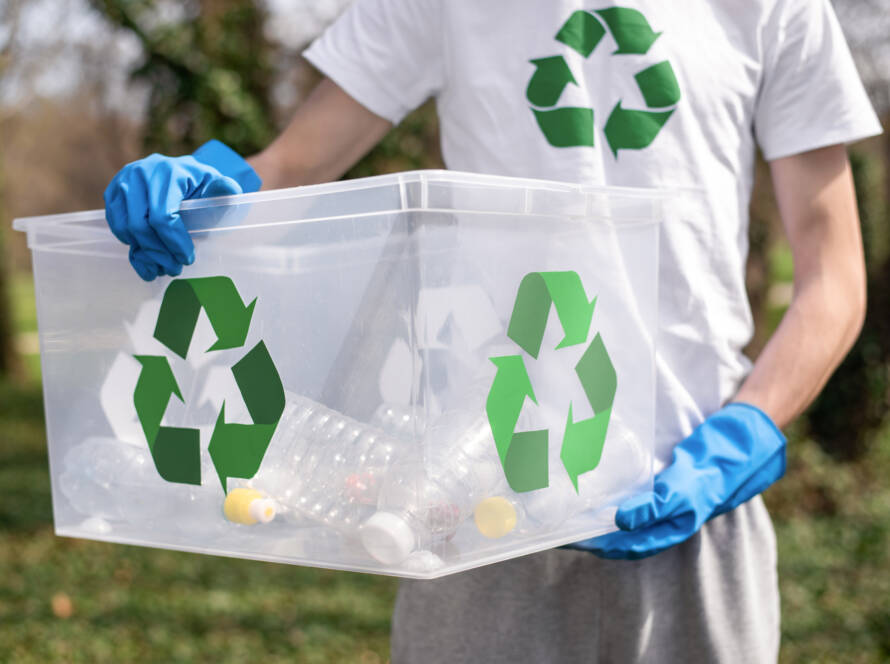
Recycled PET (rPET) is manufactured using post-consumer PET waste collected from bottles, containers, and other recyclable PET products.
Instead of extracting new fossil resources, rPET reprocesses existing plastic materials into new packaging-grade resin.
This approach significantly reduces:
- Raw material extraction
- Energy consumption
- Greenhouse gas emissions
- Landfill waste
rPET plays a major role in supporting circular economy initiatives worldwide.
Why rPET Has a Lower Carbon Footprint
The largest environmental advantage of rPET comes from avoiding the energy-intensive production steps required for virgin resin manufacturing.
Compared with virgin PET, recycled PET requires:
- Less fossil fuel extraction
- Less refining
- Lower processing temperatures
- Reduced transportation of raw materials
Typical Carbon Footprint of rPET
Most lifecycle assessments estimate:
0.4–1.2 kg CO₂e per kg of rPET resin
This represents a carbon reduction of approximately:
50% to 80% lower emissions compared to virgin PET
For brands pursuing ESG goals and net-zero commitments, this reduction can significantly improve sustainability performance.
Glass Packaging: Recyclable but Carbon Heavy
Glass is often perceived as environmentally superior because it is infinitely recyclable and made from abundant natural materials.
However, recyclability alone does not determine sustainability.
Glass manufacturing requires melting raw materials at temperatures exceeding 1,500°C, resulting in substantial energy consumption.
Additionally, glass is significantly heavier than PET packaging.
Carbon Footprint of Glass
Typical emissions for glass packaging range from:
1.5–4.0 kg CO₂e per kg
However, weight plays a critical role.
A glass bottle can weigh several times more than an equivalent PET bottle, leading to:
- Higher transportation emissions
- Increased fuel consumption
- Greater logistics costs
- Larger overall lifecycle impact
Even when recycled content is incorporated, glass often struggles to match the total carbon performance of lightweight rPET packaging.
Aluminum Packaging: Highly Recyclable but Energy Intensive
Aluminum is another material frequently praised for its recyclability. Like glass, aluminum can be recycled repeatedly without significant degradation in quality.
Aluminum offers several sustainability advantages.
Benefits include:
- Exceptional barrier protection
- Infinite recyclability
- Strong circular economy potential
- Lightweight compared to glass
However, primary aluminum production remains one of the most energy-intensive industrial processes globally.
Mining bauxite ore and refining it into aluminum requires enormous electricity consumption.
Typical Carbon Footprint of Aluminum
Primary aluminum production may generate:
8–16 kg CO₂e per kg of aluminum
Recycled aluminum significantly improves environmental performance, reducing emissions by up to 95%.
However, many packaging systems still contain varying amounts of virgin aluminum, impacting their overall carbon footprint.
Lifecycle Carbon Footprint Comparison
The following table summarizes typical lifecycle emissions for common packaging materials:
| Material | Approximate CO₂e Emissions (per kg) |
|---|---|
| rPET | 0.4–1.2 kg CO₂e |
| Virgin PET | 2.0–3.5 kg CO₂e |
| Glass | 1.5–4.0 kg CO₂e |
| Primary Aluminum | 8–16 kg CO₂e |
While values vary by region and production methods, the trend remains remarkably consistent:
rPET typically delivers the lowest greenhouse gas emissions among mainstream packaging materials.
Transportation Emissions Matter More Than You Think
Many sustainability discussions focus only on material production.
However, transportation often represents a substantial share of total lifecycle emissions.
Because PET and rPET are lightweight materials, they enable:
- More units per truckload
- Lower fuel consumption
- Reduced logistics costs
- Lower greenhouse gas emissions
A truck carrying glass bottles may transport significantly fewer units compared to PET bottles due to weight limitations.
This difference becomes increasingly important for global supply chains.
The Circular Economy Advantage of rPET
A circular economy keeps materials in use for as long as possible.
rPET fits perfectly into this model because PET packaging can be collected, recycled, and converted into new packaging products multiple times.
Benefits include:
- Reduced virgin plastic demand
- Lower carbon emissions
- Less landfill waste
- Greater resource efficiency
Governments and global brands are increasingly adopting recycled-content mandates, making rPET a strategic packaging choice for the future.
The Future of Low-Carbon Packaging
As governments implement stricter sustainability regulations and consumers demand environmentally responsible products, packaging decisions will increasingly be guided by measurable environmental performance.
Lifecycle assessments consistently demonstrate that:
- Recycled content matters
- Lightweight materials reduce transportation emissions
- Circular economy models lower resource consumption
- rPET offers substantial carbon savings compared to virgin alternatives
For many packaging applications, rPET represents the optimal balance between performance, recyclability, scalability, and climate impact.
Organizations looking to reduce greenhouse gas emissions across their supply chains are therefore prioritizing recycled PET as a key component of their sustainability strategies.
Conclusion
When evaluated through lifecycle analysis and greenhouse gas emissions data, recycled PET consistently emerges as one of the most climate-friendly packaging materials available today.
While glass and aluminum provide valuable recycling benefits, their manufacturing and transportation footprints can be substantially higher. Virgin PET remains a practical and lightweight solution, but rPET offers the same core performance advantages while dramatically reducing carbon emissions.
For brands seeking sustainable packaging solutions that align with circular economy goals, lower carbon footprints, and evolving regulatory requirements, rPET presents a compelling path forward.
Ready to Reduce Your Packaging Carbon Footprint?
Reducing the carbon footprint of packaging starts with smarter material choices. By switching to rPET, businesses can significantly cut emissions while supporting a more circular and resource-efficient economy.
At Tapadia Polyesters, we provide high-quality rPET flakes made from post-consumer PET bottles, helping brands and manufacturers meet their sustainability objectives without sacrificing performance or reliability.
Connect with Tapadia Polyesters to discover how our rPET solutions can support your sustainable packaging goals.
Frequently Asked Questions (FAQs)
The carbon footprint of packaging refers to the total greenhouse gas emissions generated throughout a packaging material’s lifecycle, including production, transportation, recycling, and disposal.
rPET reduces resource extraction, lowers energy consumption, diverts plastic waste from landfills, and supports a circular economy by reusing existing PET materials.
Not always. While glass is recyclable, its higher weight and energy-intensive manufacturing often result in greater lifecycle emissions than lightweight rPET packaging.
A lifecycle assessment evaluates environmental impacts across the entire packaging lifecycle, including raw material extraction, production, transportation, use, recycling, and disposal.
Yes. rPET can be recycled multiple times and is widely used in bottle-to-bottle recycling systems and various packaging applications.
Brands use rPET to reduce carbon emissions, meet sustainability targets, comply with regulatory requirements, and respond to growing consumer demand for environmentally responsible packaging.