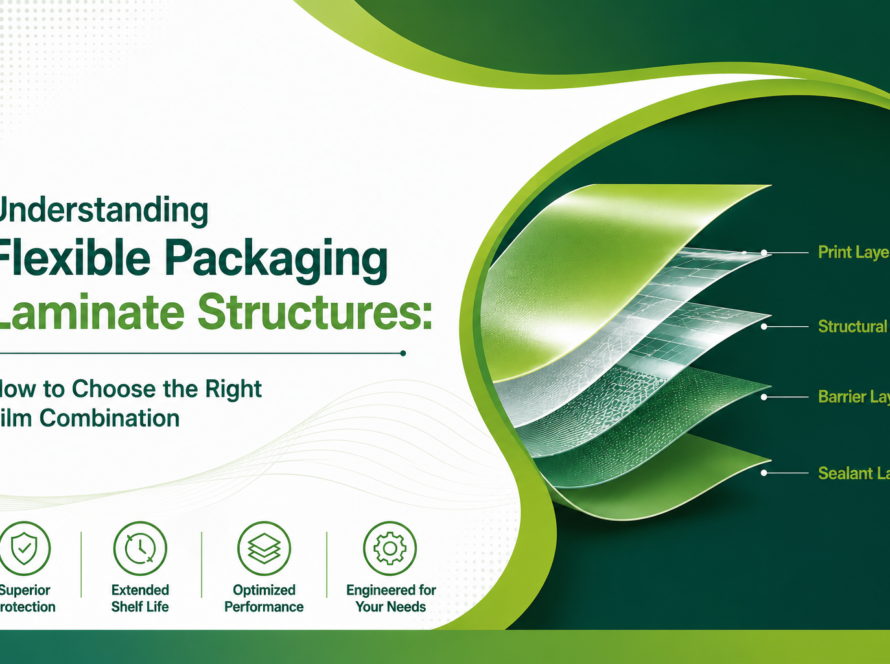
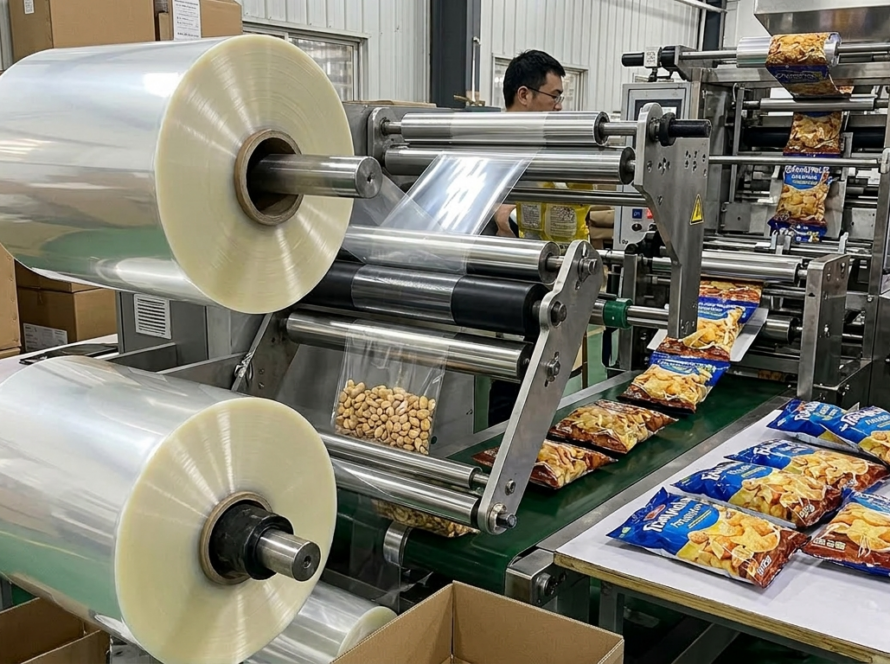
Flexible packaging plays a critical role in preserving product quality, extending shelf life, and enhancing brand appeal. However, selecting the right film material is where many businesses struggle. Among the most commonly used materials are BOPET (Biaxially Oriented Polyethylene Terephthalate), BOPP (Biaxially Oriented Polypropylene), and BOPA (Biaxially Oriented Polyamide). Each of these films offers distinct advantages, and understanding their differences is essential for making the right choice.
For manufacturers and brand owners, the decision often comes down to three key factors: barrier performance, printability, and application suitability. Let’s explore how these films compare and where each one performs best.
What Makes These Films Different?
Although all three films are biaxially oriented—meaning they are stretched in both machine and transverse directions—their base polymers give them very different characteristics.
- BOPET is a polyester-based film known for strength, dimensional stability, and excellent barrier performance. Tapadia Polyester is a trusted manufacturer of high-quality BOPET films designed for demanding packaging applications.
- BOPP is derived from polypropylene and is widely used for its clarity, moisture resistance, and cost-effectiveness.
- BOPA, commonly referred to as nylon film, is valued for its toughness, flexibility, and superior puncture resistance.
Barrier Properties: The Core of Packaging Performance
Barrier performance determines how effectively packaging protects products from oxygen, moisture, and external contaminants.
BOPET: Balanced High Barrier
BOPET offers excellent resistance to both oxygen and moisture, making it a reliable option for extending shelf life. It also performs well against oils, chemicals, and light when coated or metallized.
Best suited for:
- Snack packaging
- Ready-to-eat meals
- Industrial products
BOPP: Moisture Barrier Strength
BOPP offers strong moisture barrier properties, but its oxygen barrier is moderate. This makes it suitable for products that need protection from humidity but not necessarily from oxidation.
Best suited for:
- Biscuits and bakery items
- Confectionery
- Labels and overwrap films
BOPA: Superior Oxygen Barrier
BOPA stands out with its exceptional oxygen barrier, especially under varying temperature conditions. However, it has relatively lower moisture resistance, which is why it is often laminated with polyethylene (PE).
Ideal for:
- Vacuum-packed meat
- Seafood packaging
- Frozen and processed foods
Mechanical Strength and Durability
Packaging must withstand handling, transportation, and storage conditions without failure.
- BOPET offers high tensile strength and dimensional stability, making it resistant to stretching and tearing.
- BOPP is lighter and less rigid, suitable for applications where flexibility is more important than strength.
- BOPA is the strongest and most puncture-resistant, capable of handling sharp or heavy contents without damage.
This makes BOPA particularly valuable in applications where durability is non-negotiable.
Printability and Visual Appeal
In retail environments, packaging often serves as the first point of interaction with customers. High-quality printing can significantly influence purchasing decisions.
BOPET
BOPET films provide a smooth and stable surface for printing, allowing for sharp graphics and excellent ink adhesion. They are commonly used in laminated structures where premium branding is required.
BOPP
BOPP is widely preferred for its high clarity and glossy finish, making colors appear vibrant and attractive. It is one of the best options for visually appealing packaging.
BOPA
BOPA offers moderate printability. While it performs well in functional packaging, it is usually combined with other films to enhance visual presentation.
Thermal Resistance and Processing Performance
Temperature resistance is another important factor, especially for food packaging that undergoes heating or freezing.
- BOPET excels in high-temperature environments, making it suitable for retort and hot-fill applications.
- BOPP has limited heat resistance, which restricts its use in high-temperature processing.
- BOPA performs well across a wide temperature range, including freezing conditions, making it ideal for frozen food packaging.
Cost Considerations
Budget constraints often influence material selection, especially in high-volume production.
- BOPP is the most economical option, making it ideal for mass-market products.
- BOPET offers a balance between cost and performance, delivering strong barrier and mechanical properties at a reasonable price.
- BOPA is generally more expensive, justified by its superior strength and performance in demanding applications.
Comparison Table - BOPET vs. BOPP vs. BOPA
| Property | BOPET | BOPP | BOPA |
|---|---|---|---|
| Oxygen Barrier | Excellent | Moderate | Outstanding |
| Moisture Barrier | Excellent | Good | Moderate |
| Tensile Strength | High | Medium | High |
| Heat Resistance | High | Moderate | High |
| Printability | Excellent | Good | Good |
| Cost | Medium | Low | High |
Practical Use Cases: Matching Film to Application
Choosing the right film depends on the specific requirements of your product.
Choose BOPET if:
- You need high barrier protection and durability
- Your packaging requires heat resistance
- Premium printing and branding are important
Choose BOPP if:
- Cost efficiency is your priority
- You need excellent clarity and moisture protection
- Your product has a shorter shelf life
Choose BOPA if:
- Your product requires high puncture resistance
- You are using vacuum or modified atmosphere packaging
- You are packaging perishable items like meat or seafood
The Power of Multi-Layer Structures
In modern packaging, a single material is rarely used alone. Instead, manufacturers combine multiple films to create high-performance laminates.
Examples include:
- BOPET + PE for moisture and heat resistance
- BOPA + PE for vacuum packaging
- BOPP + Metallized layers for snack packaging
These combinations allow businesses to tailor packaging solutions to specific needs, ensuring optimal protection and efficiency.
Why BOPET Remains a Preferred Choice
With its balance of strength, barrier properties, and printability, BOPET continues to be one of the most versatile films in the packaging industry. As a leading manufacturer, Tapadia Polyester produces high-quality BOPET films that meet global standards and cater to diverse industries.
From food packaging to industrial applications, BOPET provides reliability and performance that businesses can depend on.
Conclusion
Selecting between BOPET, BOPP, and BOPA is not about choosing the “best” material—it’s about choosing the right material for your specific application.
- BOPET delivers strong overall performance and versatility
- BOPP offers affordability and visual appeal
- BOPA excels in strength and demanding environments
Understanding these differences helps businesses make informed decisions that improve product protection, reduce costs, and enhance brand value.
Looking to upgrade your packaging performance? Tapadia Polyester, a leading manufacturer of high-quality BOPET films, offers reliable and customized solutions tailored to your industry needs.
Get in touch with us today to discover how the right BOPET film can transform your packaging efficiency and product quality.
Frequently Asked Questions (FAQs)
The main difference lies in their base materials and performance. BOPET is polyester-based with strong barrier properties, BOPP is polypropylene-based and cost-effective, while BOPA is nylon-based with superior strength and puncture resistance.
BOPET and BOPA are better choices for extending shelf life due to their strong oxygen barrier properties. The final choice depends on moisture sensitivity.
It depends on the product. BOPP works well for dry snacks, BOPET is ideal for long shelf-life items, and BOPA is best for vacuum-packed foods.
BOPET can withstand high temperatures and pressure, making it suitable for sterilization processes in retort applications.
Yes, multi-layer laminates often combine BOPET, BOPP, and BOPA to achieve the desired balance of strength, barrier protection, and cost efficiency.
BOPET offers a unique combination of durability, thermal stability, and printability, making it suitable for a wide range of applications.