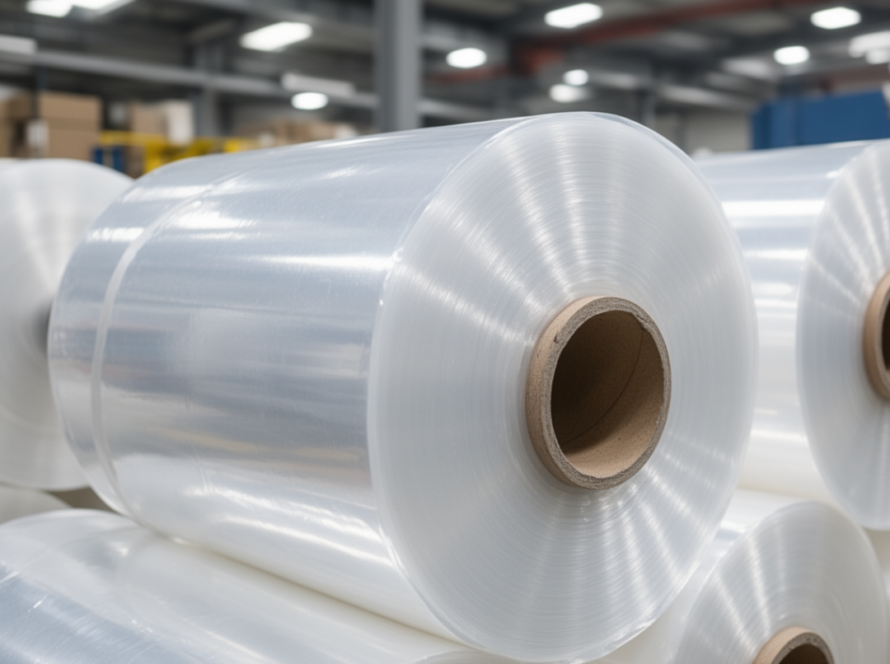
Flexible packaging protects products, supports efficient manufacturing and helps brands communicate their value. From food and personal care to industrial applications, packaging performance depends on material selection, design, printing, lamination and sealing.
Choosing the right packaging film is essential for balancing product protection, appearance, production efficiency and cost. For manufacturers and converters, understanding polyester film properties helps them select materials suited to their packaging requirements.
So, what makes great flexible packaging? It starts with the right film.
1. Understand the Application Before Choosing a Film
Different products require different packaging properties. Food products may need moisture and oxygen protection, while personal care and industrial products may prioritise appearance, strength or durability.
Before selecting a flexible packaging film, consider the product, shelf-life requirements, packaging format, printing method and storage conditions. The right material combination helps meet these requirements efficiently.
2. Prioritise Strength and Dimensional Stability
Packaging films must withstand printing, lamination, slitting, filling and transportation.
Biaxially oriented polyethylene terephthalate (BOPET film) is widely used for its tensile strength and dimensional stability. These properties support consistent converting performance and reliable handling.
Film thickness, laminate construction and processing conditions also influence the final packaging performance.
3. Ensure Printability and Visual Appeal
Clear graphics and consistent colours help packaging communicate brand value. BOPET polyester film offers useful optical and surface properties for printing applications.
Manufacturers should consider surface treatment, ink compatibility, print registration and lamination requirements to achieve consistent results.
4. Select the Right Barrier Properties
Flexible packaging may need protection against moisture, oxygen or light, depending on the product and its shelf-life requirements.
Polyester film can contribute to the overall barrier performance of a package, while specialised coatings, metallisation or additional laminate layers may be needed for greater protection.
Manufacturers should evaluate oxygen transmission rate (OTR), water vapour transmission rate (WVTR) and the performance of the complete packaging structure.
5. Consider Converting Performance and Cost
Film consistency affects production efficiency, material waste and finished-package quality. Manufacturers should assess thickness, surface properties, dimensional stability, adhesive compatibility and supplier reliability.
The lowest-priced film is not always the most economical choice. Selecting the appropriate grade and thickness can help balance material consumption, processing efficiency and packaging performance.
6. Evaluate Sustainability and Traceability
Sustainability is an important consideration in packaging material selection. Recycled polyethylene terephthalate (rPET), material efficiency and supply chain traceability can support responsible material decisions.
Tapadia Polyesters manufactures polyester films and produces recycled PET flakes from post-consumer plastic bottles. When evaluating recycled materials, businesses should consider quality consistency, recycled-content documentation and applicable regulations.
Recyclability also depends on the complete packaging structure, particularly when multiple materials are laminated together.
7. Choose a Reliable Polyester Film Manufacturer
A dependable supplier helps manufacturers maintain product consistency and production schedules. Buyers should evaluate technical specifications, quality processes, application support and supply reliability.
Tapadia Polyesters Pvt. Ltd. manufactures polyester films under the T-PET brand for flexible packaging, lamination, labelling and industrial applications. The company serves customers in India and international markets, including the USA and Europe.
8. Why Is BOPET Film Important in Flexible Packaging?
BOPET film is made by stretching polyethylene terephthalate in two directions to improve its mechanical and physical properties.
Its strength, clarity, dimensional stability and printability make it suitable for printed laminates, wrappers, pouches and labels, depending on the selected grade.
However, heat sealing and specialised barrier protection may require additional materials or a carefully designed multilayer structure.
For more information, read our guide to BOPET films.
Conclusion
Great flexible packaging combines product protection, visual appeal, processing consistency, cost efficiency and responsible material selection.
BOPET polyester film offers useful properties for applications requiring strength, dimensional stability and printability. Manufacturers should assess product requirements, barrier performance, converting conditions and sustainability objectives before choosing a material.
Tapadia Polyesters provides polyester film solutions for flexible packaging and industrial applications, serving customers in India and international markets.
Looking for the right polyester film for your packaging requirements? Contact us to discuss your application and technical specifications.
Frequently Asked Questions (FAQs)
A good flexible packaging film provides the properties required for its intended application, including suitable strength, printability, barrier performance, dimensional stability, and converting compatibility.
BOPET film is valued for its tensile strength, dimensional stability, clarity, and printability. It is commonly used as an outer layer in laminated flexible packaging structures.
Manufacturers should consider the product, packaging format, film thickness, barrier requirements, printing and lamination processes, storage conditions, and overall cost.
Polyester film offers certain barrier properties, but performance depends on the specific grade and packaging structure. Additional layers, coatings, or metallisation may be required for demanding applications.
Yes. Tapadia Polyesters exports polyester film products to the USA and Europe, serving international markets with materials for flexible packaging and industrial applications.