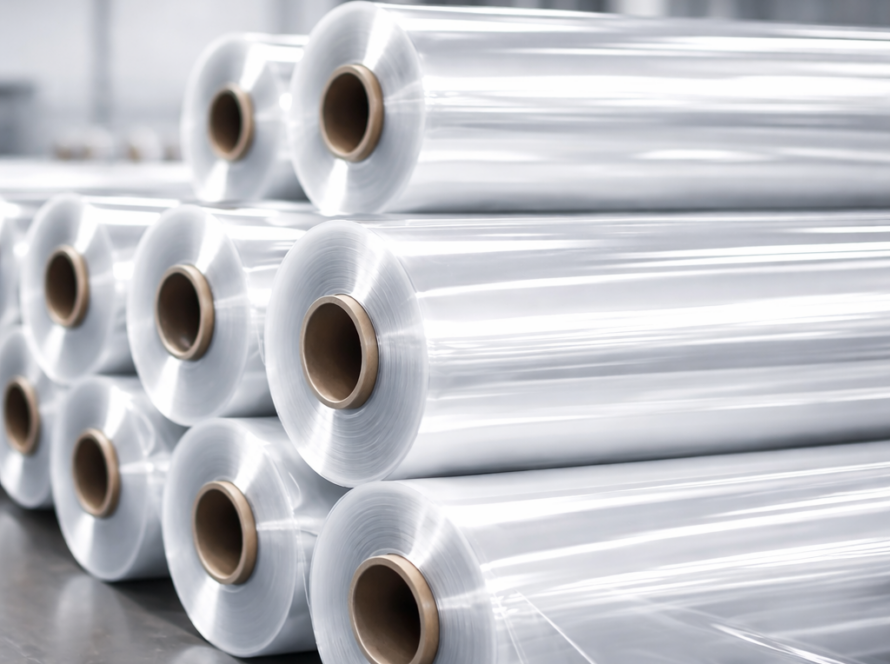
In packaging and printing, surface quality matters as much as film strength. Polyester films offer strength and clarity—but their surface is naturally smooth and chemically non-reactive. This makes it difficult for inks and adhesives to stick properly.
Corona treatment solves this problem. It improves the surface of polyester films so printing looks better and lamination bonds are stronger. In this article, we explain in simple terms how corona-treated films work and why they are important.
What Is Corona Treatment?
Corona treatment is a surface treatment process. A high-voltage electrical discharge is applied to the film surface as it moves through a machine.
This electrical energy:
- Changes the top surface of the film
- Increases surface energy
- Makes the film easier to print and laminate
Importantly, corona treatment only affects the outer surface. The film’s strength, clarity, and thickness remain the same.
Why Polyester Films Need Treatment
Polyester films are widely used in packaging because they offer:
- High strength
- Good transparency
- Heat resistance
- Dimensional stability
However, untreated polyester has low surface energy. That means:
- Ink may not spread evenly
- The adhesive may not bond properly
- Lamination may fail
Without proper adhesion, printing and lamination performance become unreliable.
Corona treatment increases surface energy, allowing inks and adhesives to stick securely.
How Corona Treatment Improves Printability
Printability in flexible packaging involves multiple technical parameters, including ink transfer, color density, sharpness, and resistance to rubbing or scratching. Corona treatment improves each of these areas.
1. Better Ink Spreading
Printing requires ink to spread smoothly across the film surface. If the surface energy is low, the ink forms droplets instead of spreading evenly.
Corona treatment helps ink:
- Spread uniformly
- Form sharp and clear images
This improves overall print appearance.
2. Stronger Ink Adhesion
Printing is not only about appearance. The ink must remain attached during:
- Lamination
- Pouch making
- Heat sealing
- Transport
Corona-treated films provide stronger bonding between ink and film. This reduces:
- Ink peeling
- Scratching
- Smudging
The result is long-lasting print performance.
3. Higher Production Efficiency
When films are properly treated:
- Printing defects are reduced
- Rejection rates decrease
- Machines can run at higher speeds
This improves productivity for converters.
How Corona Treatment Improves Lamination Quality
Lamination combines multiple film layers into one structure. Each layer serves a purpose, such as the following:
- Strength
- Barrier protection
- Printed graphics
Strong bonding between layers is essential.
1. Stronger Adhesive Bond
Adhesives need proper surface contact to create a strong bond. Corona treatment increases surface energy, allowing adhesives to:
- Wet the surface properly
- Form stronger bonds
- Maintain high peel strength
This reduces the risk of delamination.
2. Better Performance Under Stress
Packaging often faces:
- Heat during sealing
- Moisture
- Mechanical handling
Corona-treated films help maintain bond integrity under these conditions, ensuring packaging integrity.
3. Consistent Lamination Results
Modern packaging uses:
- Solvent-based lamination
- Solvent-free lamination
- Extrusion lamination
Corona-treated polyester films perform reliably across these processes, providing consistent results.
Does Corona Treatment Last Forever?
Over time, surface energy may gradually reduce—a phenomenon known as treatment aging.
To maintain performance:
- Store films properly
- Avoid long storage periods
- Use films within recommended timelines
Quality manufacturers control treatment levels carefully to ensure stable performance.
Applications of Corona-Treated Polyester Films
Corona-treated films are widely used in:
- Flexible packaging laminates
- Labels and graphic films
- Industrial laminations
- Specialty coatings and overlays
- Metallized films
In all these applications, good print quality and strong lamination are essential.
Key Benefits of Corona-Treated Films
Here is a simple summary of the advantages:
- Improved ink spreading
- Stronger ink adhesion
- Better lamination bond strength
- Reduced delamination
- Fewer printing defects
- Higher production efficiency
These benefits reduce waste and improve final product quality.
Corona Treated Films vs Untreated Films
| Aspect | Untreated Films | Corona Treated Films |
|---|---|---|
| Ink adhesion | Normal adhesion | Strong and uniform |
| Lamination strength | Medium to low bond | High bond integrity |
| Print quality | Acceptable, slight variation | Sharp, vibrant |
| Production efficiency | Standard efficiency | Reduced waste |
| End-use performance | Suitable for general use | Long-lasting results |
The comparison clearly shows why corona-treated films are the preferred choice for demanding applications.
Conclusion
In modern packaging and industrial applications, performance is built layer by layer—and it starts at the surface. Corona-treated films enable stronger ink adhesion, superior print quality, and reliable lamination, ensuring finished products meet functional and aesthetic expectations.
With its focus on advanced processing and quality control, Tapadia Polyesters delivers corona-treated polyester films that help converters achieve consistent results, reduce waste, and enhance overall product value.
Looking to improve printability and lamination performance? Partner with Tapadia Polyester for corona-treated films engineered for reliability and excellence.
Contact us today to discuss your technical requirements and explore film solutions tailored to your application.
Frequently Asked Questions (FAQs)
No. The treatment modifies only the outermost molecular layer of the surface. Core mechanical properties such as tensile strength and dimensional stability remain unchanged.
Corona treatment increases surface energy to improve ink, coating, and adhesive adhesion on polyester films.
Printing on untreated polyester film typically results in poor ink adhesion and high failure rates. Additional surface treatment would be required before printing.
Yes. The process does not involve chemical coatings. It uses electrical discharge and air, making it a clean and efficient surface modification method.
They use dyne test inks or surface energy testing tools.