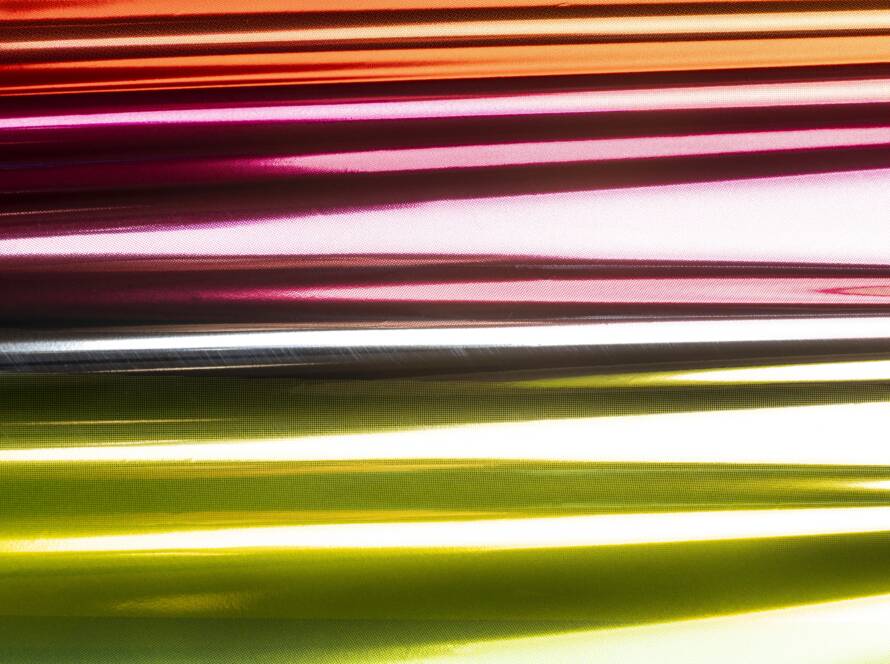
Metallized PET film has become a foundational material in decorative and functional packaging, prized for the way it combines shelf appeal with practical barrier performance. However, within the specialty metallized PET category, two distinct film types are frequently confused with one another: holographic metallized PET film and window metallized PET film.
Both films deliver strong visual differentiation and brand visibility, but they achieve this through entirely different manufacturing mechanisms – and they suit different design and functional requirements.
For packaging companies, converters, and brand teams specifying materials for a new SKU or redesign, choosing between the two is not a matter of one being universally better. It is a matter of matching the film’s construction to the packaging design, barrier requirements, and production specifications.
Understanding the technical differences between these films prevents costly specification errors. Specifying a fully metallized holographic film when a product window is required will obscure the contents, while specifying a window metallized film without accounting for the reduced barrier in the clear zone can compromise product shelf life. This guide breaks down how each film is made, where each performs best, and how to evaluate which one fits your flexible packaging or labelling project.
The Foundation: What Is Metallized PET Film?
Before comparing the two specialty variants, it is necessary to understand the base technology.
Metallized PET film is produced by vacuum-depositing a thin layer of aluminium onto the surface of biaxially oriented PET (BOPET) film. This metallisation process gives the film a reflective, metallic appearance and significantly enhances its barrier properties against moisture, oxygen, and light – making it valuable both decoratively and functionally in packaging structures.
From this base process, manufacturers can produce different visual and functional effects depending on how the metallisation is applied and treated. That is where holographic and window metallized PET films diverge.
What Is Holographic Metallized PET Film?
Holographic metallized PET film is produced by micro-embossing a diffraction grating pattern onto the film’s surface before or during the vacuum metallisation process. This microscopic structure consists of thousands of nano-scale ridges that interact with incident white light. As light strikes these ridges, it diffracts and separates into its component wavelengths, producing the rainbow, shifting, three-dimensional visual effect associated with holographic packaging and security labels.
Because the holographic effect is structural rather than printed, it does not rely on inks or dyes to produce its colours. When combined with the reflective aluminium layer, the diffraction effect is amplified, creating a brilliant, high-contrast visual surface.
Key Characteristics
- Visual effect: Produces a distinctive rainbow or dynamic light-diffraction effect across the film.
- Customisation: Can be manufactured with generic repeating holographic patterns or custom, brand-specific holographic designs.
- Surface coverage: Typically features a fully metallized surface, unlike window metallized film which leaves defined transparent areas.
- Shelf appeal: Delivers strong shelf standout and premium visual perception.
Tapadia Polyesters manufactures a 13-micron holographic metallized film engineered to provide dynamic, shimmering effects while acting as a barrier against moisture, oxygen, and odours.
Why Buyers Choose Holographic Film
The primary driver for specifying holographic film is shelf impact. In a crowded retail environment, the dynamic light-shifting properties of the film can help a pack stand apart from static printed graphics or standard metallisation. Because the effect is embedded in the film itself, it can provide a premium visual alternative to other decorative finishing approaches; converters should confirm the final process route and cost with the relevant film and packaging partners.
A secondary driver can be brand protection. The micro-embossing technology used to produce a true holographic diffraction pattern is sophisticated and more difficult to reproduce than ordinary print. When supported by an appropriate custom design and a wider authentication programme, a holographic feature can contribute to anti-counterfeiting and product-verification efforts.
Typical Applications
Holographic effects are widely associated with premium positioning, security, and strong visual differentiation. This film type is popular in categories where perceived value and authenticity are competitive requirements.
- Premium and gifting packaging: Where holographic effects reinforce a perception of quality, exclusivity, and high value, particularly in spirits, cosmetics, and confectionery.
Anti-counterfeiting and security: Custom holographic features can support brand protection and authentication strategies when incorporated into an appropriate wider security or authentication programme.
- Festive or limited-edition packaging: Where a distinctive visual finish supports short-term marketing campaigns and seasonal promotions.
- Labels and decorative laminates: For products competing heavily on shelf visibility, where the holographic film serves as an eye-catching base substrate for subsequent printing.
What Is Window Metallized PET Film?
Window metallized PET film is produced by first fully metallizing the PET film with an aluminium layer and then selectively removing the metallization from specific predetermined areas where a clear window is required. This creates a transparent window within the otherwise reflective metallized surface.
The position, size, and shape of the clear areas can be customized according to the customer’s packaging artwork and application requirements. This allows converters and brands to combine the premium visual appeal of a metallized surface with product visibility in selected areas of the package.
Key Characteristics
- Visual effect: Combines a reflective metallized surface with clear, transparent areas.
- Design integration: Metal can be selectively removed to create window shapes that align with specific packaging design elements or product-viewing areas.
- Customisation: Window size, shape and placement can be tailored according to customer requirements.
- Functionality: Allows product visibility or transparent design elements while retaining the metallized appearance across the rest of the film.
TPPL offers window metalized film in 12, 15 and 18-micron thicknesses, designed to combine metallized packaging aesthetics with product visibility.
Why Buyers Choose Window Metallized Film
Window metallized film is specified when the packaging needs to combine the visual impact of a metallic finish with product visibility.
The manufacturing process starts with a fully metallized PET film. Aluminium is then removed selectively from the areas specified by the customer, creating clear windows while retaining the metallic appearance across the remaining surface.
This approach gives packaging designers greater flexibility to determine exactly where the product should be visible. The clear section can be incorporated into the overall packaging artwork, allowing consumers to inspect the product while the surrounding metallized areas maintain a premium shelf appearance.
Typical Applications
Window metallized film is particularly useful when a brand wants the shelf presence of a metallized package without completely hiding the product inside, or when the packaging design requires a specific transparent area.
- Snack and confectionery packaging: Where a metallized finish supports shelf appeal while windows allow consumers to see chips, dry fruits, bakery items, or premium sweets.
- Retail-ready flexible packaging: Allowing consumers to inspect the product quality, color, or texture while retaining a premium metallized package appearance elsewhere.
- Laminated pouches with graphic cutouts: Where selected areas of metallization are removed to create transparent design elements or product-viewing windows.
Holographic vs Window Metallized PET Film: Side-by-Side Comparison
| Feature | Holographic Metallized PET | Window Metallized PET |
|---|---|---|
| Primary Mechanism | Micro-embossed diffraction pattern + metallisation | Full metallisation followed by selective removal of metal from designated areas |
| Visual Effect | Rainbow, 3D, or light-shifting metallic finish | Reflective metallized finish with clear transparent window areas |
| Main Purpose | Premium visual differentiation; custom features can support authentication | Combining metallic aesthetics with product visibility |
| Customisation | Generic patterns or custom proprietary holograms | Custom window shapes registered to print design |
| Barrier Consideration | Continuous metallized coverage; verify performance in the final structure | Reduced barrier in the unmetallized window areas; verify the overall pack |
| Typical Applications | Security labels, premium cartons, festive packaging | Snack pouches, dry fruit bags, retail-ready packaging |
Can You Combine Both Effects?
Yes. For applications demanding the highest level of visual impact and functionality, it is possible to combine both technologies. Holographic window metallized film blends holographic brilliance with clear window areas.
The holographic layer provides a dynamic, shimmering effect that changes with light and angle, while the transparent window allows consumers to view the contents. TPPL offers this combined holographic window metallized film in 10, 12, 15 and 18-micron specifications.
Key Buyer Considerations for Specialty Metallized Films
Sourcing specialty metallized films is more complex than buying standard plain or metallized PET. When specifying either film type, converters and brand procurement teams should evaluate the following technical and commercial criteria with their film manufacturing partner:
1. Window Accuracy and Process Control (Window Metallized Film)
For window metallized film, accurate positioning of the areas where metal is removed is critical. The clear windows must align correctly with the packaging artwork, printed graphics, and final pouch dimensions.
Buyers should discuss the required window design, positioning accuracy, and production consistency with the supplier to ensure that the metallized and transparent areas remain aligned throughout the production run.
2. Pattern Customisation and Security (Holographic Film)
When specifying holographic film, buyers must determine whether a generic repeating holographic pattern is acceptable or whether a custom proprietary pattern is required. Generic patterns are typically suited to decorative applications. Custom patterns can provide a stronger basis for brand differentiation and authentication when combined with appropriate verification controls, but they may require custom tooling, which affects lead times and minimum order quantities.
3. Barrier Performance and Structural Requirements
Metallized PET can enhance oxygen and moisture barrier performance, but the final result depends on the full laminate structure, coating integrity, and test conditions. Because windowing deliberately leaves areas of the film unmetallized, those transparent zones have the baseline barrier properties of clear PET. Buyers must confirm whether the product’s shelf-life requirements can still be met with a window metallized structure or whether an alternative clear-barrier layer should be considered for the windowed area.
4. Substrate Thickness and Mechanical Strength
Both holographic and window metallized films are built on a base BOPET substrate. The thickness, tensile strength, and dimensional stability of this base film must match the mechanical demands of the converting equipment and the final package structure. TPPL lists specialty-film options in 10, 12, 13, 15, and 18-micron specifications, depending on the product. The selected gauge should be validated through trials against the intended printing, lamination, and pack requirements.
5. Lamination, Print Compatibility, and Surface Energy
Specialty films must integrate seamlessly into existing converting workflows. Buyers should confirm that the chosen film’s surface energy, commonly expressed in dyne/cm, is compatible with their specific adhesives, inks, and lamination processes. Inadequate treatment or insufficient metallisation adhesion can lead to delamination or ink-transfer issues during downstream converting or use.
6. Production Consistency and Supply Planning
Visual consistency is the primary reason brands buy these films. Ask your supplier how they control metallisation thickness (optical density), holographic pattern fidelity, and window registration consistency across multiple batches.
TPPL’s quality-assurance information describes automated inspections, hands-on testing, and tracking from raw materials to final roll. Its certificates page lists ISO 9001, ISO 14001, and ISO 45001 among the company’s published certifications. TPPL’s product information also describes global supply. International buyers should confirm logistics, documentation, and market-specific requirements for their individual enquiry.
Making the Right Choice for Your Packaging
Neither film type is a universal default – the right choice depends on what the packaging is designed to communicate and do. When initiating a new packaging project, procurement and technical teams should evaluate their primary objectives against the capabilities of each film.
As a starting framework:
- If the priority is maximum visual impact, shelf standout or a specialist authentication feature, holographic metallized PET film is generally the stronger fit. It provides a continuous, highly reflective surface and, when custom-designed, can contribute to a wider brand-protection approach.
- If the priority is combining a premium metallized finish with a functional or design-driven see-through area to show the physical product, window metallized PET film is generally the stronger fit. It balances aesthetics with consumer transparency.
- If the application requires both security/premium aesthetics and product visibility, holographic window metallized film provides a combined solution, merging the diffraction effects of holography with the functionality of registered clear zones.
In many cases, brands evaluate both options against physical mockups and consumer testing before finalising the packaging structure, particularly for new product launches where shelf performance is a key success metric.
Tapadia Polyesters manufactures holographic metallized, window metallized, and combined holographic window PET films as part of its broader polyester film portfolio. This range allows packaging companies, converters, and brand teams to evaluate suitable specialty-film specifications with a single technical partner against their design, converting, and production requirements.
Not sure which specialty metallized PET film fits your packaging project? Contact the Tapadia Polyesters team to discuss your design, barrier requirements, required thickness, surface treatment, converting process, and forecast volume. The team can help you identify the appropriate PET film specification for your application and processing requirements.
Frequently Asked Questions (FAQs)
Holographic metallized PET film uses a micro-embossed diffraction pattern combined with metallisation to create a dynamic, light-shifting visual effect. Window metallized PET film is first fully metallized and then has the aluminium selectively removed from specific areas to create clear, transparent windows.
It is used in premium flexible packaging, decorative labels, gifting cartons and specialist authentication applications. Its distinctive light-diffraction effect supports shelf differentiation. Where a custom pattern is integrated into a broader authentication programme, it can also contribute to brand-protection efforts.
It is used in flexible packaging applications that require a premium metallized finish combined with a visible product-viewing area or a registered graphic cutout. Common applications include snack packaging, dry fruit bags, bakery wrappers and laminated stand-up pouches.
No. The transparent window areas are unmetallized, which means those specific zones will have the baseline barrier properties of clear PET rather than the enhanced oxygen and moisture barrier of the metallized sections. Packaging engineers must account for this when calculating the overall barrier of the pouch.
Yes. Window metallized PET film requires controlled processing to selectively remove the metal layer from designated areas while maintaining accurate window shapes and positioning. The required level of precision depends on the customer’s design, repeat pattern, and final converting requirements.
Yes. Holographic window metallized film combines both technologies. It features the shimmering, light-diffracting effects of holographic film alongside precisely registered clear windows, offering both premium visual impact and product visibility in a single substrate.
Neither is universally better. The choice depends on the packaging design objectives. If the priority is maximum visual impact and an option for a specialist authentication feature, holographic film is usually the better fit. If the priority is combining a metallic finish with product visibility, window metallized film is the appropriate choice.