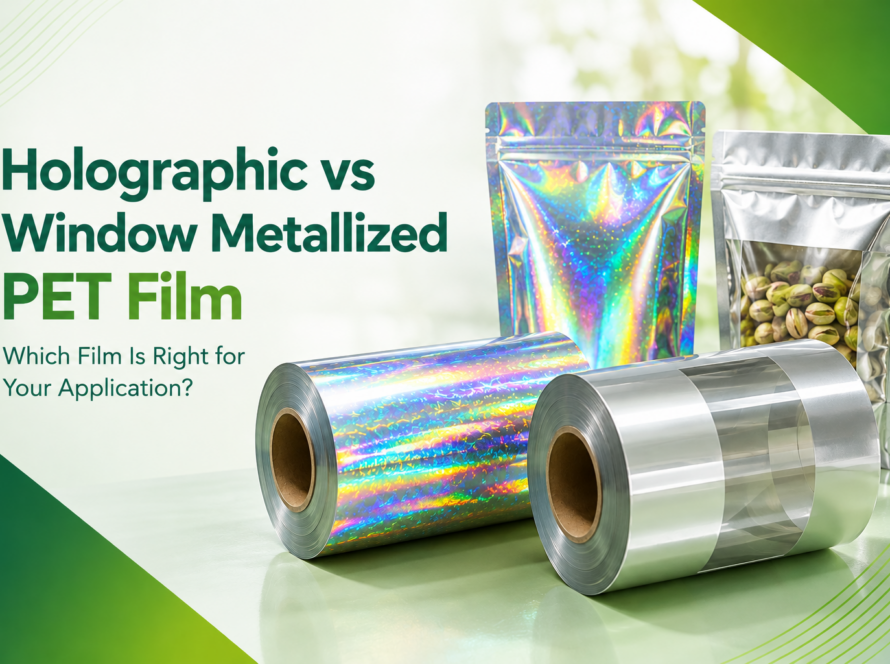
Luxury packaging creates an impression long before a product is touched or used. In a competitive marketplace, a single glance at the packaging can communicate quality, exclusivity, and trust. For brands seeking a premium impact without complex design, holographic and metallized films offer an elegant and effective solution.
This guide explains how these advanced films enhance luxury packaging—visually, functionally, and commercially.
Understanding Holographic and Metallized Films
Before exploring their applications, it’s important to understand what differentiates these films.
Holographic films are polyester films that display dynamic, multi-color patterns that change with light and angle. They are created using advanced embossing and coating techniques that form microscopic patterns on the film surface.
Metallized films are polyester films coated with a very thin layer of metal, usually aluminum. This creates a shiny, mirror-like finish that reflects light and gives packaging a premium, metallic appearance.
Both film types are based on high-quality polyester (PET), ensuring durability, flexibility, and compatibility with modern packaging processes.
Why Luxury Brands Choose These Films
Luxury packaging is not just about aesthetics—it’s about the complete sensory and functional experience. Holographic and metallized films deliver a balance of visual appeal, performance, and scalability.
Some of their standout benefits include:
- Eye-catching shine that attracts attention instantly
- A refined, modern look that feels premium
- Built-in anti-counterfeiting protection (especially holographic films)
- Lightweight and flexible, making them easy to process
- Excellent barrier properties against moisture, light, and air
- Compatibility with printing, lamination, and coating processes
- Cost-effective compared to traditional metallic foils
These qualities help brands create packaging that looks expensive but remains practical and scalable.
How These Films Enhance Product Appeal
Holographic and metallized films do more than decorate packaging—they define perception and trust.
Holographic films add movement and color-shifting effects, giving packaging a futuristic, artistic feel. Metallized films, on the other hand, provide a clean and elegant metallic shine that communicates sophistication and reliability.
Together, these films help brands:
- Increase shelf visibility
- Strengthen brand recall
- Justify premium pricing
- Enhance perceived product quality
- Reduce the risk of counterfeiting and brand imitation
Common Applications in Luxury Packaging
Thanks to their versatility, these films are widely used across premium product categories, including:
- High-end cosmetic boxes and labels
- Perfume and personal care packaging
- Premium food and confectionery wraps
- Pharmaceutical cartons and blister packs
- Electronics and accessory boxes
- Gift wraps and decorative laminates
Whether used as a full wrap, label, or lamination layer, these films bring a distinct luxury finish.
Holographic vs. Metallized Films: A Quick Comparison
| Feature | Holographic Films | Metallized Films |
|---|---|---|
| Visual effect | Color-changing, 3D patterns | Smooth, mirror-like metallic shine |
| Brand impact | Bold, creative, modern | Elegant, premium, sophisticated |
| Best for | Youthful, eye-catching designs | Classic luxury and high-value products |
| Light reflection | Multi-angle light play | High, uniform reflectivity |
| Printing compatibility | Excellent | Excellent |
Both film types can be customized in thickness, finish, and coating to match the specific needs of your brand.
Sustainability and Responsible Packaging
Modern luxury packaging must also support responsible material choices. Advances in film technology allow premium aesthetics and security features with reduced environmental impact.
Sustainability advantages include:
- Reduced metal usage compared to traditional foil
- Lightweight materials that lower transportation emissions
- Compatibility with recyclable polyester structures
- Efficient material utilization without compromising performance
Tapadia Polyester continues to innovate by combining luxury appearance, security, and environmental responsibility.
Why Polyester Films Are the Ideal Base
Polyester forms the backbone of holographic and metallized films due to its superior technical properties:
- High tensile strength
- Excellent dimensional stability
- Heat resistance for printing and sealing
- A smooth surface for coatings and embossing
This ensures that holographic and metallized films maintain their shine, clarity, and performance throughout the product’s lifecycle—from factory to shelf to customer.
Conclusion
Luxury packaging does not need to be complex or costly. With the right holographic and metallized films, brands can achieve premium aesthetics, strong protection, and built-in anti-counterfeiting security in a single solution.
Tapadia Polyester offers high-quality film solutions designed to elevate packaging, protect brand integrity, and create lasting impressions.
Contact us today to create packaging that looks premium, performs reliably, and safeguards your brand value.
Frequently Asked Questions (FAQs)
Metallized films focus on barrier protection with a metallic look, while holographic films emphasize visual impact and brand differentiation.
Yes. Both holographic and metallized polyester films are compatible with various printing methods, including gravure, flexo, and digital printing.
Absolutely. Polyester-based films offer high strength, tear resistance, and long-lasting visual appeal.
Yes, positively. Metallized films, in particular, provide excellent barriers against moisture, oxygen, and light, helping extend shelf life.
Yes. Holographic films can be customized with unique patterns, logos, and security elements, enhancing brand recognition while providing strong protection against counterfeiting.
Tapadia Polyester uses advanced manufacturing and strict quality controls to deliver films that meet international packaging standards.